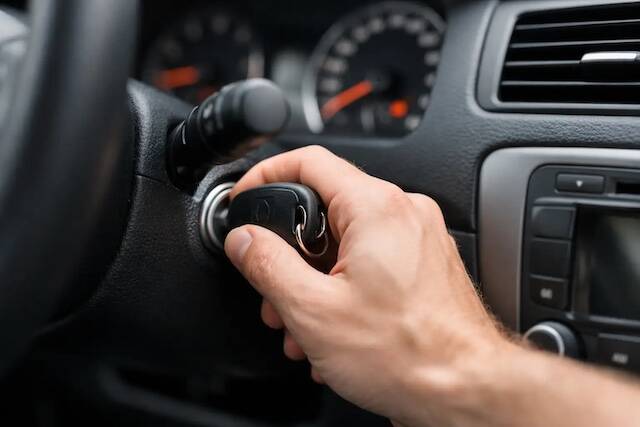
You put the key in, give it a turn, and nothing happens. If you are asking, "why is my car key not turning", the good news is that this problem is often caused by something simple rather than a major fault. The key is not to force it. A stuck key barrel can go from awkward to expensive very quickly if too much pressure is applied.
In most cases, the issue comes down to steering lock tension, a worn key, dirt inside the ignition, or a fault in the ignition barrel itself. Sometimes it is an easy fix you can try in a minute or two. Sometimes it needs a specialist to sort it properly on site. Knowing the difference can save you time, money, and a lot of stress.
Why is my car key not turning in the ignition?
The most common reason is pressure on the steering lock. If the front wheels were turned when you parked, the steering wheel can lock hard against the ignition system. That puts tension on the mechanism and stops the key from rotating.
Try this first. Insert the key fully, then gently move the steering wheel left and right while applying light turning pressure to the key. Usually one side will have a little movement. As you hold the wheel in that direction, the key may turn normally. The important part is being gentle. If the key feels like it is bending, stop.
Another common cause is key wear. Car keys do not stay sharp forever. Over time, the cuts on a metal blade key can wear down, especially if the key is used daily, dropped often, or carried loose with other heavy keys. A worn key may still unlock the door but struggle in the ignition because the internal pins need a more precise fit.
If you have a spare key, try it. If the spare turns and the main key does not, the key itself is likely the problem. That is usually easier and cheaper to deal with than a full ignition fault.
The problem may be the key, not the car
Drivers often assume the ignition barrel has failed, but the key is frequently the real issue. A bent key can catch inside the ignition and stop it turning. Even a slight twist in the blade can be enough to cause trouble.
Take a close look at the key. If it appears worn, chipped, cracked, or bent, do not keep trying it. That increases the risk of snapping it in the ignition, which creates a more urgent and awkward job.
Modern vehicle keys can also have a plastic head that becomes loose or damaged. In some cases the blade still goes in, but the key no longer turns properly because the whole unit is compromised. If your key has recently been repaired badly, glued, or held together with tape, that can also be part of the problem.
What if the spare key does not work either?
If neither key turns, the fault is more likely in the ignition barrel, the steering lock, or an internal component linked to the barrel. At that point, repeated attempts usually do more harm than good.
There is also a chance the wrong key is being used. It sounds obvious, but in households or workplaces with several similar vehicle keys, it happens more often than people admit.
Dirt, debris and lack of movement
Ignitions are exposed to years of use. Dust, pocket fluff, moisture, and grime can work their way into the barrel. If the car is older or has not been driven much, the internal wafers can become sticky or fail to move freely.
You might notice the key goes in stiffly, only inserts part of the way, or feels rough when you try to turn it. In these cases, the temptation is to spray whatever lubricant is handy into the ignition. That is risky. The wrong product can attract more dirt, leave residue behind, or damage delicate internal parts.
If the key does not slide in smoothly or the barrel feels gritty, it is usually better to stop before the key gets trapped. A proper inspection can identify whether the barrel can be freed up, repaired, or needs replacing.
Automatic gear position can sometimes be the issue
On some automatic vehicles, the ignition system will not behave as expected unless the gear selector is fully in Park. If the selector is slightly out of position or there is a fault in the interlock system, the key may refuse to turn or release.
Try moving the gear lever firmly into Park, then try the key again. If that does not help, press the brake pedal and try once more. This is not the most common cause, but it does catch people out, particularly if the vehicle is on a slope or the selector has not clicked fully home.
Cold weather and battery issues
Cold conditions can make an existing problem more obvious. Metal contracts, lubrication thickens, and a worn key or barrel may suddenly stop cooperating on a frosty morning. That does not necessarily mean the weather caused the fault, but it may have pushed a weak component over the edge.
A flat battery is less likely to stop a traditional key from physically turning, but on some vehicles with electronic ignition systems, steering lock modules or key recognition faults can make it seem like the key is jammed. If your dashboard is completely dead and the vehicle has signs of battery trouble, that may be part of the picture.
This is where vehicle make and model start to matter. Some faults are simple mechanical issues. Others involve the car recognising the key and allowing the ignition to operate. If the symptoms feel inconsistent, specialist diagnosis is usually the quickest route.
What not to do when your car key will not turn
The biggest mistake is force. If you twist harder, jiggle aggressively, or use pliers on the key head, you can snap the key or damage the ignition barrel. What might have been a straightforward fix can then turn into key extraction, barrel repair, and replacement work.
Avoid flooding the ignition with household oil or random sprays. Avoid hitting the key, hammering the steering column, or trying internet tricks that are not suited to your vehicle. Cars vary, and what works for one may damage another.
If the key is stuck but not turning, do not keep cycling it in and out at speed. If something inside the barrel is misaligned or damaged, that repeated movement can make it worse.
When to call a specialist
If you have tried easing the steering wheel, checked the gear position, and tested a spare key without success, it is time to get proper help. The same applies if the key is bent, partly stuck, or feels close to snapping.
A mobile auto locksmith can usually diagnose the fault at your location and deal with the problem without the need for towing. Depending on the cause, that may mean cutting a fresh key to the correct code, repairing the ignition barrel, extracting a damaged key, or replacing and programming parts where needed.
For most drivers, convenience matters just as much as cost. If your car is stuck outside your house, at work, or in a car park, the last thing you want is to arrange transport to a garage and wait days for a fix. That is why an on-site service is often the most practical option.
Why quick action matters
Ignition faults rarely improve by themselves. If the key has started sticking occasionally, that is a warning sign. Acting early can prevent a complete failure at the worst possible moment, such as when you are due at work, collecting the children, or trying to get home late in the evening.
For motorists in Essex, Orme AutoKeys provides the kind of fast-response help that keeps disruption to a minimum. The aim is simple - diagnose the issue properly, fix it where the vehicle is, and get you back on the road fast.
A sensible next step if your key will not turn
If you are still wondering, "why is my car key not turning", start with the safe checks: ease the steering wheel, try the spare key, and make sure an automatic is fully in Park. If that does not solve it, stop before force turns a minor fault into a bigger repair.
A car key that will not turn is frustrating, but it is usually a fixable problem. The quickest way forward is not guesswork. It is getting the right help before the key, barrel, or lock suffers more damage.