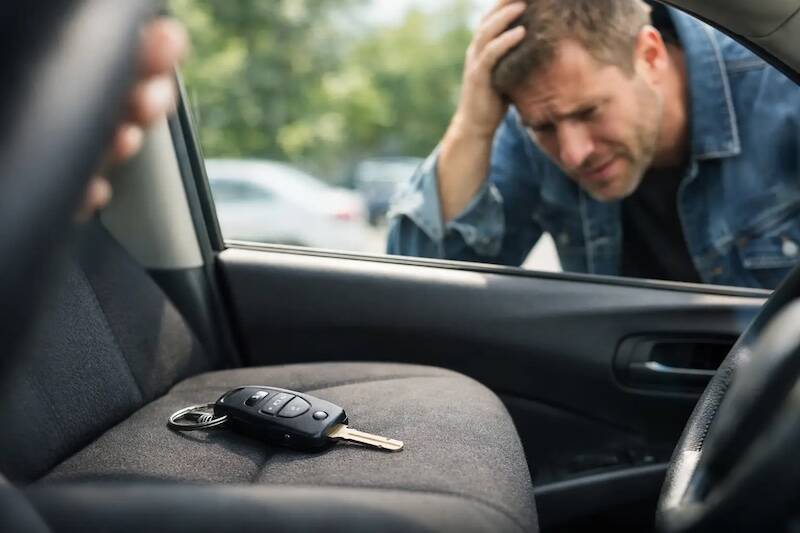
You close the door, hear the lock click, and then spot the keys sitting on the seat. If you are wondering what to do after locking keys inside car, the priority is simple - stay calm, stay safe, and avoid making the problem worse.
A car lockout feels urgent because it usually happens when you are already in a rush. School run, work meeting, shopping, late finish, bad weather - it never happens at a convenient time. The good news is that most lockouts can be resolved quickly, and often without damage, if you take the right steps early.
What to do after locking keys inside car first
The first few minutes matter. Before trying anything, check every door, the boot and all accessible entry points. On some vehicles, one door may still be open even when the others are locked. If your car has a hatchback or split-fold rear access, it is worth checking that too.
Next, think about where the spare key is. If someone at home or work can bring it to you quickly, that may be the easiest option. But if the spare is far away, or you are stranded somewhere inconvenient, waiting for it may cost more time than calling a specialist straight away.
If there is a child, vulnerable person or pet inside the vehicle, treat it as a safety issue rather than just an inconvenience. In that situation, act immediately and contact emergency services if there is any risk from heat, cold, distress or lack of ventilation. Time matters more than the lock.
If everyone is safe and the car is secure, your next step is to avoid improvised methods that can lead to expensive damage.
Avoid the common mistakes
When people panic, they often reach for the fastest-looking fix. Coat hangers, screwdrivers, wire, wedges and online hacks can seem tempting, especially if you have seen someone do it before. The trouble is that modern vehicles are not built for rough entry methods.
Trying to force the door frame can bend it. Prying trim away can damage paint, seals and internal components. Fishing around inside the door can interfere with wiring, airbags or locking mechanisms. Even if you do get the car open, you may end up with wind noise, water leaks or a door that no longer closes properly.
There is also the issue of newer security systems. Many vehicles now have deadlocks, shielded linkages and anti-theft features that make DIY entry much less reliable than it used to be. What worked on an older car often does not work on a modern one.
That is why a rushed attempt to save money can quickly become a more expensive repair job.
When to call a car locksmith
If the spare key is not immediately available, a specialist auto locksmith is usually the most practical answer. A proper vehicle locksmith can gain entry using non-destructive methods, which means opening the car without breaking windows or damaging locks where possible.
That matters because a lockout is rarely just about getting inside. You want the problem resolved properly, on the spot, and with as little disruption as possible. For many drivers, especially if they are away from home or need the vehicle the same day, speed and convenience matter just as much as cost.
A mobile auto locksmith can usually come to your location, assess the vehicle, and open it with the right tools for that make and model. If the issue turns out to be more than a simple lockout - for example, a key has been lost altogether, snapped, or stopped working - they may also be able to help with replacement and programming there and then.
That is often a better route than arranging recovery and then waiting on a dealership timetable.
What to expect when help arrives
A professional locksmith should first confirm that the vehicle belongs to you or that you are authorised to access it. That protects both the customer and the vehicle. They will then identify the locking system and choose the least invasive method of entry.
The exact approach depends on the car. Some vehicles allow safe tool-assisted access through a precise gap. Others need a different method because of deadlocks, frameless doors or more sensitive electronics. It depends on the model, the age of the vehicle and the position of the keys inside.
The key point is that a specialist should be aiming to open the car cleanly, not by forcing it. If your key is visible on the seat, that does not necessarily make the job easier, because access still depends on the vehicle’s design. What looks simple from outside can be far more complex once security features are involved.
For Essex drivers dealing with a lockout at home, at work or in a car park, this is where a mobile service really earns its value. Companies such as Orme AutoKeys focus on getting to the vehicle, solving the issue at your location and getting you moving again without the usual delays.
What if your keys are not just locked in, but also faulty?
Sometimes people assume they have simply locked keys inside car, only to realise the situation is slightly different. The key may be inside, but the spare does not work. Or the remote may have stopped responding, which can make it look like a lockout when the real issue is a dead battery, failed fob or programming fault.
If your central locking has been unreliable recently, mention that when you call for help. It can save time and help the locksmith prepare. The same goes for keys that have been dropped in water, physically damaged or behaving inconsistently.
This is one of the main benefits of using an auto locksmith rather than relying on general roadside improvisation. A specialist can often diagnose whether you are dealing with a straightforward locked-in-key problem or a wider key system fault.
Is it worth calling your breakdown provider?
It can be, but it depends on your cover and how quickly they can attend. Some breakdown services include lockout support, while others treat it as a limited service or subcontract the job. In practice, the wait may be longer than going direct to an auto locksmith, especially during busy periods.
There is also a difference between roadside assistance and key expertise. A breakdown provider may help with access, but not every patrol is equipped to deal with advanced key issues, transponder problems or replacement needs. If your problem turns out to involve more than opening the door, you may still need a vehicle locksmith afterwards.
So if speed is your main concern, or if you suspect there is a fault with the key as well as the lockout, going straight to a specialist is often the cleaner option.
How to stay safe while you wait
If you are locked out in a public place, stay with the vehicle if it is safe to do so. Keep your mobile phone charged if possible and remain somewhere visible, especially at night. If you are on a roadside or near moving traffic, prioritise personal safety over staying close to the car.
If bad weather is a factor, try to wait somewhere sheltered nearby while keeping the vehicle in sight. For parents, one practical step is to check whether essential items such as child seats, coats or medication are trapped inside, because that may affect how urgently you need attendance.
It is also sensible to have your vehicle details ready. Registration, make, model and location help speed things up when arranging assistance.
How to reduce the chance of it happening again
Most lockouts happen through habit rather than carelessness. You are carrying bags, juggling children, finishing a call, loading tools, or simply running late. The key ends up on the seat, in the boot, or in a cup holder just as the locks engage.
A spare key stored safely outside the vehicle is the best back-up. That might mean leaving it with someone you trust rather than keeping it at home where it is no use in an emergency. If your vehicle has keyless entry, be aware that battery issues and signal quirks can still cause confusion, so regular battery replacement in the fob is worth doing before it becomes urgent.
Some drivers also benefit from a simple routine: keys in hand before the door shuts, every time. It sounds obvious, but repetition is what prevents most lockouts.
If you have already had one lockout, it is worth taking seriously. A second one usually happens the same way.
A locked car with the keys inside is frustrating, but it does not need to turn into a damaged door, a broken window or a wasted day. The quickest route is usually the calmest one - check the obvious, avoid force, and get the right help so the problem is dealt with properly and you can get back on the road quickly.