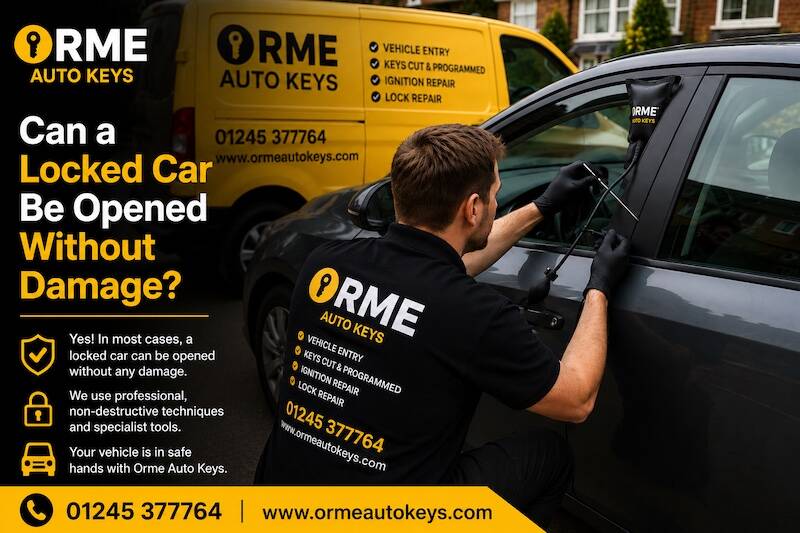
Standing next to your car, keys visible on the seat or missing altogether, the first question is usually the same - can a locked car be opened without damage? In many cases, yes. Modern vehicles can often be opened using non-destructive entry methods, but the right approach depends on the make, model, locking system and the reason you cannot get in.
That matters because one wrong move can turn a straightforward lockout into a more expensive repair. Damaged door seals, bent frames, broken lock barrels and triggered alarm systems are all common when people try to force entry. If you need to get back in quickly, the safest option is usually the one that causes the least disruption to the vehicle.
Can a locked car be opened without damage in every case?
Not in every case, and that is the honest answer. Plenty of lockouts can be resolved cleanly with specialist tools and the right experience. But some situations are more complicated, especially on newer vehicles with deadlocks, shielded locking mechanisms or faults within the locking system itself.
If the car is simply locked with the keys inside, there is a good chance a trained auto locksmith can gain access without harming the vehicle. If the issue involves a failed lock, damaged latch, broken key or an electrical problem, the job may take longer and the method may need to change. The aim is still to avoid damage wherever possible, but success depends on what has actually gone wrong.
This is why two vehicles parked side by side can have completely different outcomes. An older hatchback with a basic central locking system is not the same as a newer BMW, Ford, Mercedes or Volkswagen with advanced anti-theft features. The question is less about whether entry is possible and more about which method is safe for that specific vehicle.
What non-destructive car entry actually means
Non-destructive entry means opening the vehicle without breaking windows, drilling locks or causing visible damage to doors, trims or seals. It does not mean using a trick that works on every car. It means using the correct method for the vehicle so access can be gained with minimal risk.
A professional auto locksmith may use specialist picks, decoder tools, air wedges or manufacturer-specific entry techniques. These are designed to work with the locking system rather than against it. On the right vehicle, this allows access without leaving marks or creating faults that show up later.
That is very different from improvised methods found online. Coat hangers, screwdrivers and wedges bought in a hurry can damage the weather seal, scratch paintwork, interfere with airbags in the door or bend the top of the frame just enough to create wind noise and water leaks afterwards. What looks like a cheap fix can end up costing far more than the lockout itself.
When non-destructive entry is most likely to work
The best-case scenario is a standard lockout where the vehicle is secure, the locks are functioning normally and the keys are inside. In that situation, a trained specialist can often open the car at the roadside without damage and without removing parts unnecessarily.
It can also work well when the remote has stopped responding but the car itself is otherwise fine. Sometimes the problem is a flat key battery, a failed remote button or a key that has fallen out of sync. If the vehicle can be accessed cleanly, the next step may simply be key testing, battery replacement or programming.
Lost key situations can still involve non-destructive entry too. If the customer has no working key at all, access may be needed before a replacement can be cut and programmed on-site. Again, the goal is to get in without harming the vehicle and then solve the key problem properly rather than offering a temporary workaround.
When it gets more difficult
Deadlocks are one of the main complications. On many cars, once deadlocked, the interior handles and lock buttons will not release the doors even if someone can reach them. That means older methods people have heard about simply will not work.
Mechanical faults can also change the job. If a lock barrel has failed, a latch is jammed or the central locking module is not responding, entry may involve diagnosis as well as access. In these cases, the problem is not just that the car is locked. The locking system itself may have stopped working as intended.
There are also cases where previous damage makes clean entry harder. If someone has already tried to force the door, inserted the wrong tool into the lock or snapped a key in the mechanism, the locksmith may need to work around that first. Even then, the priority remains the same - use the least invasive method available.
Why modern cars need specialist handling
Vehicle security has improved massively over the years, which is good news until you are locked out. Transponder systems, shielded locks, smart keys and electronic immobilisers make cars harder to steal, but they also make amateur entry attempts far riskier.
On many newer vehicles, the lock is only one part of the problem. Gaining access is often the first stage, followed by key cutting, chip programming or remote pairing. A general locksmith may not carry the tools to deal with vehicle electronics, and a main dealer may ask for the car to be transported to them. That adds cost, time and inconvenience, especially if the vehicle is stranded at home, at work or in a car park.
A mobile auto locksmith is usually the more practical option because the work happens where the car is. For Essex drivers in particular, that can mean getting back on the road the same day rather than waiting for recovery and workshop availability.
Should you try to open it yourself?
If there is a child, vulnerable person or animal locked inside and there is immediate danger, call the emergency services without delay. That is the priority.
In a standard lockout with no immediate risk, trying to open the car yourself is rarely the best move. The methods people reach for first are usually the ones most likely to create damage. Even if the door opens, you may end up with a bent frame, damaged trim or a locking fault that did not exist before.
There is also the issue of time. Many motorists spend an hour trying online tips, only to need a specialist anyway. By then, the job is harder and the car may already have been marked or forced. Fast professional help is often the quicker and cheaper route.
What to expect from a proper roadside response
A good lockout service should start by identifying the vehicle and confirming ownership. From there, the technician should assess the locking system, choose the safest entry method and explain what is possible before starting work.
If access is gained and the problem goes beyond the lockout, the next step may be cutting a new key, programming a replacement or diagnosing why the existing key stopped working. That is where a true auto locksmith service saves time. You are not just getting the door opened. You are getting the underlying issue sorted on-site where possible.
That is the value of using a specialist such as Orme AutoKeys. The aim is not simply to get into the car, but to solve the problem properly and get you moving again without the fuss of towing the vehicle elsewhere.
Can a locked car be opened without damage? Usually, yes - with the right help
Most everyday lockouts can be handled without damage when the vehicle is approached properly. The important part is not guessing, forcing or relying on one-size-fits-all tricks. It is choosing someone who understands vehicle entry systems, carries the right tools and knows when a job is straightforward and when it needs a more careful approach.
If you are locked out, the best next step is usually the calmest one. Protect the car, avoid makeshift fixes and get help from someone equipped to deal with it where you are. A rushed attempt can create a second problem you did not have five minutes earlier. The right approach gets you back in, keeps the vehicle intact and gives you a much better chance of being back on the road fast.