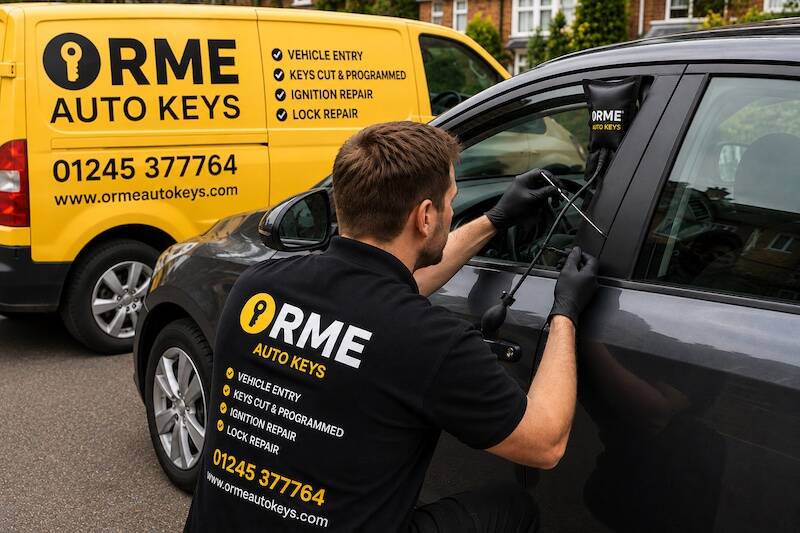
That sinking feeling usually hits before you have even checked every door. Your keys are on the seat, the boot has shut, and now you need the best way to unlock a locked car without turning a bad moment into an expensive repair.
For most drivers, the right answer is not force, guesswork or a quick trick from a video. It is choosing the fastest safe option based on the car, the key type and the urgency of the situation. Sometimes that means checking for a simple access point. In many cases, it means calling a mobile auto locksmith who can gain entry without damaging the vehicle and, if needed, sort the key problem there and then.
What is the best way to unlock a locked car?
The best way to unlock a locked car is the method that gets you back in quickly without damaging the locks, door seals, glass, paintwork or electronics. That rules out most improvised attempts.
Modern vehicles are not designed to be opened with coat hangers, screwdrivers or wedges bought in a panic. Even older cars can be damaged more easily than people think. Bent door frames, torn weather seals, scratched paint and broken locking mechanisms often cost far more to put right than calling a specialist in the first place.
If your keys are visible inside the car and you are otherwise locked out, non-destructive entry is usually the safest route. If the key is lost, broken or no longer recognised by the vehicle, the job may involve more than opening the door. You may need a replacement key cut and programmed on-site so the problem is fully resolved, not just patched over.
Start with the obvious before you do anything drastic
In a stressful moment, people often miss the simple checks. Walk around the whole vehicle once. Try every door, including the boot, because some vehicles leave one entry point unsecured. If the car uses a keyless system, check whether a spare key is close enough to be interfering, or whether the primary key has a flat battery rather than being truly locked inside.
If a child or pet is inside the vehicle, or the car is in a dangerous place, treat it as urgent straight away. The priority then is speed and safety, not trying three or four home methods first. Professional help should be your next call.
If you have roadside cover, it may be worth checking what is included, but response times vary and not all providers carry the equipment or coding tools needed for modern key issues. That matters if your problem is more than a simple lockout.
Why DIY lockout methods often make things worse
A lot of motorists search for a quick fix because it sounds cheaper and faster. In reality, the usual DIY methods come with trade-offs that rarely favour the driver.
A coat hanger or slim tool can damage internal linkages and scratch trim. Inflatable wedges can work in trained hands, but used incorrectly they can bend the top of the door or split the seal, which can then lead to wind noise and water leaks. Trying to force the window down, pry the frame or manipulate the lock manually can also trigger bigger issues with central locking and alarm systems.
There is also the matter of modern vehicle security. Many newer cars have deadlocking systems, shielded lock components and tighter tolerances around the door frame. What might have worked on an older hatchback is unlikely to work on a late-model vehicle without the right tools and experience.
The key point is simple: if the wrong method saves ten minutes but causes hundreds of pounds in damage, it was never the best option.
When a mobile auto locksmith is the right call
For most real-world lockouts, a mobile auto locksmith is the practical answer because the problem is solved where the car is parked. There is no need to arrange towing, wait for a dealership slot or risk damaging the vehicle by trying to get in yourself.
A proper auto locksmith can assess the car type, locking system and likely cause of the lockout before choosing the safest entry method. That matters because not every locked car is the same problem. One vehicle may simply need non-destructive entry. Another may have a failed key fob, a damaged blade, a snapped key in the lock, or an immobiliser issue that needs extra work once access is gained.
This is where a mobile specialist stands apart from a general recovery service. If access is only half the issue, they can often cut and programme a replacement key on-site and get you back on the road fast. That is a major difference compared with temporary entry followed by a second appointment somewhere else.
The best way to unlock a locked car without damage
If avoiding damage is the priority - and it usually should be - non-destructive entry is the standard to look for. That means opening the vehicle using specialist tools and techniques designed for your type of lockout, without breaking glass, forcing locks or distorting the door.
A trained technician will work carefully around the vehicle’s locking system, alarm and bodywork. The process depends on the make, model and age of the car. Some jobs are straightforward. Others take more care because of deadlocks, double-locking systems or tighter internal tolerances.
What matters to you as the driver is the outcome: access gained safely, no unnecessary damage, and a proper fix if the key itself is part of the problem.
Different lockout situations need different solutions
Not all lockouts should be handled the same way. If the keys are sitting on the driver’s seat and the car is otherwise fine, the aim is simply to regain access. If the key has been lost entirely, opening the car is only the first stage. You may still need a replacement cut and programmed so the car can actually be driven.
If the key fob has stopped working, the issue might be a dead battery, damaged electronics or a vehicle-side fault. If the key has snapped in the door or ignition, removing the broken part without causing further damage becomes part of the job.
This is why the best answer is often, it depends. The right approach is the one that deals with the whole problem, not just the locked door in front of you.
Cost, speed and why the cheapest option is not always cheapest
Price matters, especially when the lockout catches you at the worst time. But judging the job on call-out cost alone can be misleading.
A cheap attempt that leaves the door bent, the lock damaged or the paint scratched is not cheaper once repairs are added. The same applies if you pay for access, then still need a separate trip to a dealer for key cutting or programming. What most drivers really want is value - a fast response, no fuss, and the issue sorted properly in one visit if possible.
That is why local mobile service matters. A specialist covering Essex and nearby areas can often reach you faster than a dealer-based option and complete the work on-site. For drivers who rely on their vehicle for work, school runs or appointments, that saved time is a real part of the value.
What to do while you wait for help
Once help is on the way, keep things simple. Stay with the vehicle if it is safe to do so, have your identification ready, and be prepared to confirm ownership or access rights. That helps the job move quickly when the technician arrives.
If the weather is poor or the vehicle is in an awkward spot, make yourself visible and stay safe. If a child, vulnerable passenger or pet is locked inside, say that clearly when you call so the situation is treated with the urgency it needs.
It also helps to avoid trying one last DIY method while waiting. A failed attempt can turn a straightforward non-destructive entry into a more complicated repair.
Choosing the right help
When you need urgent access, look for a specialist in vehicle entry and keys, not just a general locksmith. Cars have their own security systems, transponders, remotes and programming requirements. The right provider should be able to explain the likely route clearly, give you a realistic arrival time and focus on solving the issue there and then.
That is the difference between a temporary fix and a proper one. Businesses such as Orme AutoKeys are built around exactly that kind of response - getting to the vehicle, gaining access safely, and dealing with the key issue on-site where possible.
A locked car is stressful enough without adding damage, delays or guesswork. The best next step is the one that protects the vehicle, saves time and gets your day moving again with the least disruption possible.