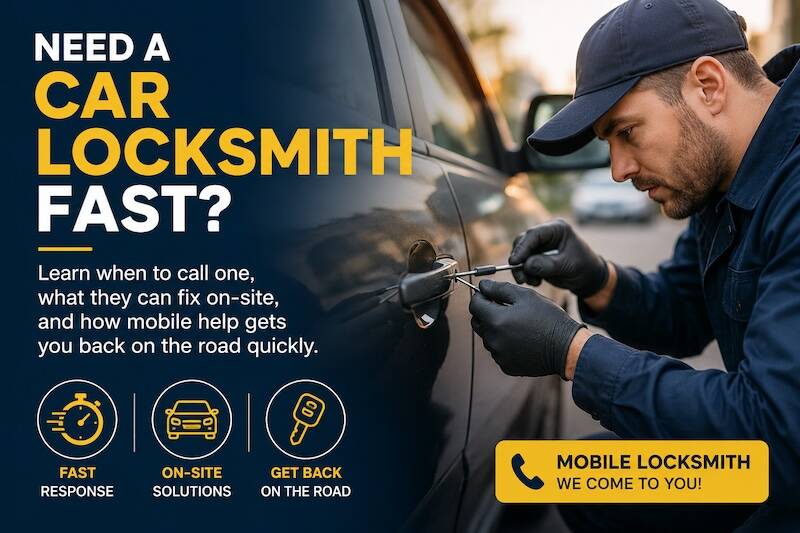
You do not think about a car locksmith until the moment you need one. It is usually raining, you are late, the shopping is in the boot, or the school run is already slipping. When your key is lost, snapped, locked inside the vehicle or simply stops working, what matters is not theory. You need someone who can get to you quickly, sort the problem properly, and get you moving again without turning a bad day into a bigger one.
That is exactly where a mobile specialist makes the difference. For most drivers, the main concern is simple - how fast can this be fixed, and will it mean towing the car, paying dealer prices, or waiting days for a key? In many cases, the answer is far better than people expect.
What a car locksmith actually does
A car locksmith deals specifically with vehicle locks, keys and security systems. That can mean gaining entry when the keys are locked inside, replacing a lost key, cutting a new key at the roadside, repairing a damaged key, or programming a replacement so the vehicle recognises it.
This is not the same as calling a general locksmith. Modern vehicles often use transponder chips, remote fobs and electronic immobilisers. Even when the blade of the key looks straightforward, the vehicle may still need the correct programming before it will start. A specialist works with those systems every day and arrives with the equipment to handle them on-site.
For the driver, the real value is convenience. Instead of arranging recovery, getting the car to a garage, and waiting for parts or coding, a mobile auto locksmith comes to your home, workplace, supermarket car park or roadside location and resolves the issue there and then where possible.
When to call a car locksmith
The obvious moment is a lockout. If the keys are on the seat and the doors are shut, or they are in the boot and the car has deadlocked, a car locksmith can usually open the vehicle using non-destructive methods. That matters, because smashing a window may seem quicker in the heat of the moment, but it often leads to a much more expensive problem.
Lost keys are another common reason. If you have no spare, many drivers assume the only route is a main dealer. Sometimes that is an option, but it is rarely the quickest and often not the most convenient. A mobile specialist can often cut and programme a replacement at your location, saving the trouble of moving the vehicle at all.
Then there are keys that have stopped working properly. The buttons may fail, the blade may be worn, the casing may crack, or the transponder may no longer communicate with the car. In other cases, the key turns badly in the ignition or the door lock becomes unreliable. These problems can start small and then leave you stranded without warning. Getting them looked at early can save you a much more urgent call later.
A snapped key is also a job for a specialist. If part of the key is stuck in the ignition, door or boot lock, forcing it further in usually makes things worse. The right tools and experience matter here, especially if you want to avoid damage to the lock itself.
Why mobile service matters so much
Most key problems are stressful because they stop your day immediately. You cannot get to work, collect the children, finish a job, or head home. That is why a mobile response is more than a convenience. It removes several steps from the problem.
If the solution comes to the vehicle, you avoid arranging a tow, taking time out for a dealership appointment, and waiting around in a reception area while your car sits elsewhere. For tradespeople, commuters and families, that difference is huge. The faster the issue is handled on-site, the less disruption the day suffers.
There is also a financial side to it. Dealer routes can involve extra costs, not just for the key itself but for transport, waiting time and missed plans. A mobile specialist is often the more practical choice because the service is built around urgent real-world problems rather than workshop scheduling.
What happens when you call
Good vehicle locksmith work is straightforward from the customer side. You explain the issue, give the vehicle make and model if you know it, and confirm your location. From there, the locksmith can usually advise what type of help is needed and what to expect on arrival.
Once on-site, the first step is identifying the problem properly. A lockout and a failed key can look similar from the outside, but the fix is not always the same. If access is needed, the vehicle is opened using the right method for that model. If a key replacement is required, the locksmith cuts the new key and programmes it to the vehicle if necessary.
The benefit of using a specialist is that this is handled as one job, not split across recovery, parts ordering and separate coding. That joined-up approach is what gets people back on the road faster.
Car locksmith or main dealer?
It depends on the situation, but for many everyday key emergencies, a car locksmith is the faster and more convenient option. Dealers can be the right route for certain specialist or brand-specific issues, particularly with very new or unusual systems. Even then, the process is often slower because the vehicle may need to be present at the dealership and appointments are not always immediate.
For lockouts, lost keys, spare keys, broken keys and many programming jobs, mobile help is often the practical answer. The key point is not that one route is always better in every case. It is that most drivers need the problem solved where the car is, not added to a queue.
That is why local coverage matters. A nearby mobile specialist serving Essex can respond with the urgency the situation needs, rather than treating it like a routine booking several days away. Businesses such as Orme AutoKeys are built around that exact need - turning an immobilised vehicle back into a usable one without fuss.
A few things drivers often get wrong
One common mistake is assuming there is nothing to be done without the original key. In many cases, that is not true. A replacement can often be created and programmed even if every key is missing.
Another is trying a quick fix that causes more damage. Coat hangers, forced door frames and improvised tools may look tempting online, but modern vehicles are not designed for that sort of entry. You can end up with scratched paint, bent trim, damaged seals or electrical faults, all because the first attempt was the wrong one.
People also put off getting a spare key because the current one still works. That makes sense until the only key is lost or fails completely. Sorting a spare in advance is usually simpler, cheaper and far less stressful than dealing with an all-keys-lost situation in a supermarket car park.
Choosing the right car locksmith
When you need help quickly, clear communication matters. You want someone who understands the problem immediately, explains the likely fix in plain English, and turns up ready to solve it. A proper vehicle locksmith should be focused on non-destructive entry where possible, on-site key cutting and programming, and getting the job completed rather than offering a temporary workaround.
Local knowledge matters too. Fast response is easier when the business genuinely covers your area and works with motorists in the region every day. That is especially important if you are stuck at work, at home with children, or parked somewhere awkward and simply want the issue finished without delay.
It also helps to choose a specialist that treats the call as urgent without making it dramatic. Most customers are already stressed enough. Reassurance, speed and competence go a long way.
The best time to think about it is before you are stranded
Nobody plans to lose a key or lock it in the car. Still, it is worth knowing who you would call before it happens. Saving the number of a trusted local specialist takes a minute and can spare you a lot of panic later.
If your current key is worn, your remote is intermittent, or you have been meaning to get a spare cut, do it before the problem becomes urgent. It is a much easier conversation when you are not standing in a car park trying to decide how you are getting home.
When vehicle key trouble does happen, the right help should feel simple. A fast response, the right tools, and a proper fix at your location can turn a stressful interruption into a short delay - and that is usually all most drivers want.